Friday, August 29, 2014

Food, Glorious Food!

Today I've had one of those days that I love. It wasn't intentional, but I ended up spending quite a bit of time in the kitchen!!! No markets this weekend, so that meant that I actually have time to do a few things.......

  • I milked my cows and separated - so have lots of cream, which is the first time in ages!
  • Incidently, yesterday I made yoghurt - 4.5 litres and started some feta
  • Today I bottled the feta in oil and herbs
  • I made two loaves of bread, one my usual multi grain and a sourdough loaf for lunch
  • This morning I went out to the garden for a look and after spending some time weeding, discovered that I have quite a few tomatoes on, eggplant are flowering, wombok and sugar loaf cabbages and cauliflower ready to pick. Lettuce, Rocket and bok choy are all but finished. Capsicums are still green and my seedling lettuce are looking healthy! The Warrigal Greens that self seeded are going crazy, and I missed some asparagus after the rain the other day!!
  • Picked a wombok and then later turned it into Kimchi - well, time will turn it into kimchi, I just gave it a help along - stay turned for a post about this when it's finished. I have to show a photo of my wombok because it is such a perfect specimen and I've NEVER been able to grow cabbages.

  • Finally found time to restart both my kefirs - I've been a bit slack, but it appears to be very forgiving! I will marinate some chicken tomorrow in milk kefir and some curry spices and then bake in the oven (as part of a curry dinner party night I'm planning!) I'm trying a second ferment of my water kefir - lime and ginger.
  • Bottled my kombucha - our backpackers have decided that they like this, so I'm going to have to keep it moving a bit faster. This lot I've bottled with apple, ginger and berries (not all together, individual flavours!)
  • Made some palm sugar syrup (1 cup of palm sugar, 1/3 cup of water - bring to the boil to melt and bottle with a vanilla bean) This is my more local version of maple syrup. Yes I know we don't have palm sugar made in Australia, but it's a lot closer than Canada!
  • Home made raw icecream!!! Yum!
  • And then dinner tonight was fabulous! Pork shanks baked in master stock, served with stir-fried vegies and noodles. Quite a few of my own garden veg, so that makes me even happier. (recipe will be on the recipe tab)

Friday, August 8, 2014

Late Winter in Queensland

Well, I think winter is over! We've had about a week or two of cold weather - that's up on last years few days! It's crazy really, because it can get very cold here, but lately it's just been getting warmer. Or am I learning to cope with the cold weather better? All I know is that I wish it would stay like it is now! Unfortunately, within the next month or so, summer will be back Queensland has 3 seasons of summer and a very short winter season!

I finally got my garden going at the beginning of winter, so it's lucky that it hasn't been so cold. I've got tomatoes flowering, eggplants and capsicums are growing well and my cabbages look fantastic! They are just starting to heart up, and so far not too many bugs! I was very late getting them in, but it's so hard here because we go from summer to winter almost within a week. Winter is my best growing time! It's about the only time of year I can grow lettuces, so we've been eating them out of the garden for ages, as well as spinach, silverbeet, bok choy and some other Asian greens that I can't remember the name of - they are the ones in the photo that just bolted almost as soon as planting them. No bugs during winter on them, although the kale has been decimated.


The chickens are laying finally! We've had backpackers here for months saying that they just can't understand why we have so many chickens when we get so few eggs! We've gone from about 2-3 a day to 15-17. It's great! So tonight I've been baking. Made icecream using 6 egg yolks, the whites went into a double batch of Macadamia Bread (almond bread), and 4 went into a lemon and ginger syrup cake.

 
We also have chickens every where! One of the problems with having so many chickens is that they tend to reproduce very easily! Which is great - we have about 6 roosters caught which we'll process one afternoon very soon. There's probably another 6 that I can't catch! I'm not really sure where they are roosting - I think it's in one of the pig paddocks.
 
My milkers are also reproducing! This cow was one I bought out of a dairy quite a while ago. She's not a young cow and this is the first time that she has been able to keep her own calf! It's lovely to see that the bonding is completely natural and something they just know! In a dairy the calves are taken off their mothers within the first few days. Any bull dairy breed calves they don't won't are usually put down and they only keep the heifers or beef breed calves. It's a tough world on a lot of farms!
 
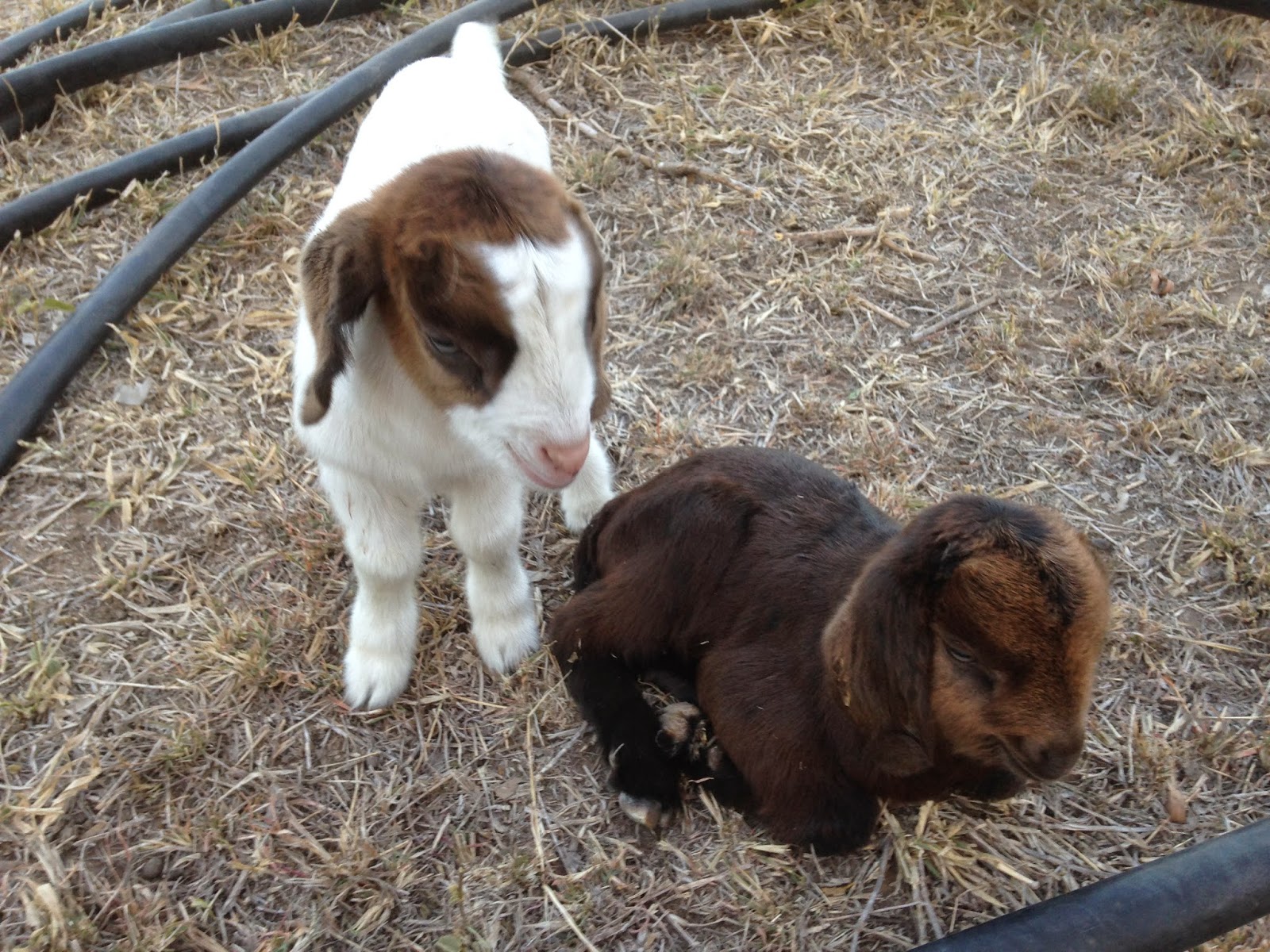
 But life on our farm is pretty good - well, except for one bad day! These baby goats are our latest ones. We are building a very nice little herd now. These are quite adorable - I love watching the goat kids play - they play chasy like human kids! One will chase the other and then they swap around!


Saturday, April 12, 2014

Sourdough Bread

Recently I was fortunate to go to a sourdough workshop. A lovely local (Rockhampton,Qld) women is running sourdough workshops. I had a fabulous afternoon! I can't think of much better fun than spending an afternoon in a kitchen, talking about and eating food. It started at 1pm with a lunch of various sourdough breads and finished at 5 with a take home package of flours, starter and a bread dough to finish off at home. In the meantime we went through the entire process of making a loaf of bread.

How can you do that in 4 hours you ask? Well you start at the end and do all the bits of the process but not in the correct order. Sigrun was very well organised and had one mix ready to finish off and rise (onion bread and a fruit and nut bread), she had pizza dough ready and a ciabatta dough to make rolls.  We had the yummiest pizzas for afternoon tea and the ciabatta rolls were delicious! We mixed our own loaf using her bubbly starter and did the initial kneading. We learnt how to stretch the dough ready for the final rise. All the while listening and learning about the whole process.

I've been wanting to make sourdough for a long time and have had so many failures and started so many starters that stopped working and basically if it could go wrong it would! Let's hope this time I can keep it going and have lots of successes! Sigrun makes it sound easy and his happy to give follow up support.

If you are interested in doing one and you live near Rockhampton, get in touch with Sigrun direct.
sigrunbishop61@gmail.com
This was the result of our afternoon (minus what we ate).


Saturday, January 18, 2014

Local Vs Organic

We started our real food journey a couple of years ago, unfortunately not when our children were young. We didn't eat a lot of junk, but we did eat a bit and because we were always so busy, the kids did get a lot of packet food in their lunch boxes. But we gradually changed and now I buy very little packet food.

We were living in Rockhampton when we first started buying organic food - about 10 years ago. We have always eaten our own meat - beef and pork mostly and when I could, I had a garden. My garden was pretty lousy until we moved back to our farm at Baralaba and it has gone from being quite good at times to currently being almost non existent. This is going to have to change very soon!

I chose organic food as it is the only way to ensure that there are no chemicals. However since I've been going to the markets on a regular basis, I've started buying all my fruit and vegetables from local growers, not all of which are organic. So what's better - organic or local? I would prefer organic for the reason stated, but it's so good to be able to support local farmers who, just like us are trying to make a living. At the markets, you can talk to the actual person who grew your food - you can ask about their chemical use, their methods of farming and just find out what they generally think of health and food. Then you can make an informed decision. Just because something is organic, does not necessarily make it healthy! I've had some pretty tasteless organic food. My rule of thumb is taste and keeping quality. The sweeter something tastes and the longer it keeps, the healthier the item is. The other advantage of buying local is that it is usually picked the few days before you buy it! This probably helps with keeping quality.

I buy most of my vegetables at Yeppoon and Rockhampton markets every second week. The food lasts for the two weeks with very few losses. To me this is fresh, which equals healthy! So what can I get locally? I buy macadamia oil and nuts, all my fruit and some green vegetables. Potatoes, onions and carrots are occasionally available, but mostly I get these through the various organic outlets I use. I really love buying local produce and last week we went to the 1770 markets and I bought the most beautiful olive oil (20 litres of it to share with my sister, so I won't run out for a while!). You can get meat at Rocky and Yeppoon markets too - either our pork, or Lilly Pilly Organics stock local beef and chicken. Therefore, it is possible to buy most of what you need to eat locally if you live in Yeppoon or Rockhampton. I'm sure most larger centres have a weekly or monthly market which would sell local produce. The more we support them the bigger they will get and the more produce they will have.

So what do you think? Is local better than organic when you are thinking to buy food?


This is 20 litres decanted into old wine bottles! Recycling and local!

Tuesday, December 17, 2013

Milking Cows Part 2

I thought I'd talk a little about my milking regime. I've read different blogs about milking cows and so thought my "ways" might be of interest. I've heard people talk about share milking, which (I presume) is the term used when the calf remains on the cow. I can't imagine having a milking cow and doing it any differently. The alternative apparently is to remove the calf and bottle feed it. What a lot of extra work that would be! It's also not natural and certainly not the best thing for the calf or the cow.

I've been involved with milking a house cow my entire life. I remember waking up most mornings as a child, to the sound of the milk separator. That's the machine that separates the milk from the cream. My father grew up on a dairy in the days when the cows were hand milked. Therefore he naturally had a house cow when he left the family dairy and married my mother. I'm one of eight kids, so having our own cow would've been essential. We grew up with fresh milk, fresh cream and home made butter. I have so many fond memories based around fresh cream - thick and just delicious on anything!

So what do I do with my house cow? Well, I have several as I don't like to be without milk and I also like to separate the milk and eat cream and make butter and make yoghurt and cheese! And if there is a surplus I give it away to friends!

Fetta Cheese
 

I keep a very close eye on my cows just before they are due to calve. I will never forget one cow I had when I was very new to milking. She had calved and I didn't know for a week. By the time I got her into the yard it was almost too late to save her back two teats. She was so full of milk, the calf was only sucking the front two, which is often the case. I managed, with great difficulty to milk out the back two. They had gone hard and the milk was like water. How she didn't get sick from mastitis I don't know. So Lesson 1 - keep an eye on your cow BEFORE she calves and milk her out each day as the calf usually won't handle all the milk.

Once she has calved, it can take a week and sometimes even longer for the milk to clean up. This first milk is colostrum and is a yellowish colour. Sometimes, if the cow has a very large and full udder, the milk can be a bit bloody - this is fine. If it's nice and clean (without blood) I usually freeze some to keep for poddy calves or pigs. When you milk this out, feed it to the chooks or pigs or dogs.

Once the milk is no longer yellow coloured and it looks good enough to keep, you may need to start locking up the calf before milking. The cow I'm currently milking gives me more than 10 litres without locking the calf up, so I don't bother. Usually though, you won't get enough out of a cow while the calf is on 100% of the time. When you want to milk, take the calf away the night before (or morning if you plan to milk in the afternoon).This is called share milking.

When I'm milking and I have plenty of milk, I usually leave a quarter for the calf. If I want all the milk I take it all. The cow will make up some more milk throughout the day, so the calf will still get plenty. If the cow doesn't let her milk down for me, I let the calf out to suck for a minute or so until she lets her milk down, then I just push the calf off and back in the calf pen. For those that are confused about my terminology, "letting the milk down" is a term used when the milk comes more freely (anyone that has breastfed, will know what I mean!) Basically it can be hard work milking if they don't let it down, and when they do, it comes easily (sort of).

I also milk by hand. Some people new to milking use a machine. I've always been told that to use a milking machine you would need at least 4 cows to make the washing up worthwhile. I've never used a machine, but I think I would have to agree. I've been milking by hand for many years, and yes dust and insects etc get into the milk, but I have a good strainer to get it all out! I really enjoy the quiet time of sitting beside the cow and just doing it! I do have to watch for the odd kick, especially if there's sandflies or buffalo fly around. But most of the time, it's peaceful and I can just sit there and plan my day. I very rarely milk more than 4 cows and that would take me about an hour, so I'm not sure how much time a machine would take.

So, my summary:
1. Keep an eye on the cow before she calves to make sure you get her in and milk her out immediately (the second day at the absolute latest!) This will help to prevent mastitis and milk fever.
2. Lock up the calf each night/or day so that you get plenty of milk.
3. If the cow doesn't let her milk down, allow the calf to suck for a minute or so first - and then put the calf away.
4. Leave a quarter for the calf if you don't need the mild. If your need is greater, the calf will be fine as the cow will compensate.
5. Feed the cow a little extra when locking up the calf and then while milking as this will ensure she keeps in good condition. A dairy cow will give EVERYTHING  to the calf and will get poor!
6. Enjoy the milk fresh, in yoghurt, cream, butter, cheese, custard!!

Wednesday, December 4, 2013

Milking Cows and Raw Milk


A little while ago I had to buy milk! This was probably the first time in about 6 years! I absolutely hate having to buy it, especially as that meant that I had to buy yoghurt and my supply of feta cheese ran out so it was devastating! Mind you I only had about a month of this, but it was enough to make me realise how lucky I am to be able to milk my own cows. I know exactly how my cows are being treated and what they eat. I also have the benefit of being able to drink raw milk – as much as I want. Milk is my go to energy drink when I’m mid way through the afternoon and need a thirst quenching pick-me-up! Fresh raw milk is an amazing product. It’s so full of goodness and just tastes so good – so much better than anything you can buy in the shops.
I’m now milking two cows, giving me about 12 litres in a milking. I’ve got about 3 more due to calve, so not sure what I’ll do then. I’d really like to make some hard cheeses, unfortunately they do take a lot of time, but I just need to set aside some time to do it, because it’s so satisfying making your own dairy products. I make feta cheese all the time, and yoghurt weekly. The feta I make is a raw milk soft and creamy style. I cut it and put it into jars with herbs and macadamia oil (from the Yeppoon Markets). I also use this cheese to make dips instead of using the philly cream cheese. It’s not quite as creamy, but is still pretty good.  If I put it in a salt brine and let it sit for a bit, it becomes more like the crumbly Greek style feta. Either way I make it, it’s pretty good!

I make about 2-3 litres of milk into yoghurt each week. Some of this I keep natural and the rest I mix with honey (from the markets) and some vanilla essence. I like it slightly sweetened – for my muesli for breakfast. For the yoghurt I “sort of” pasteurise the milk as it’s necessary to kill the bugs naturally present in milk to allow the ABC cultures in the yoghurt to grow properly. They are not as strong and can’t compete with the raw milk bugs! When I say sort of, I don’t like to boil the milk, just bring it to 80 degrees and then let it cool.
I would love to be able to make these products to sell, but unfortunately we have a stupid law in Australia that says that we aren’t allowed to! Ummm..... doesn’t make sense that the same law makers allow fast food joints and smoking....what causes more harm I wonder! Not to mention soft drinks and other rubbish! We are allowed to consume it ourselves and I think we are allowed to give it away. I read something somewhere about a bloke who was giving the milk away, but he was also selling post cards. The post cards were obviously a collector’s item, as they were expensive! You can buy milk for cosmetic purposes, which is great, because it is good for the skin!

One day I would like to start a small dairy – maybe to make cosmetic products, and cheese!
What are your thoughts on raw milk? Have you tried it and/or would you try it if given the opportunity?

For those who are interested, I will post about my milkers and the way I do it...probably of more interest to those that have or are thinking of getting a milking cow!

Saturday, November 16, 2013

Pasture

A few weeks ago (mid October) I went for a ride across most of our property and was really impressed with the quality of our pasture.

At that time, we hadn't had any rain since about April. A long dry winter and well into spring without rain, so some properties around our area were looking pretty ordinary with very short grass.  Winter is traditionally a dry time for us, but we do get the odd bit of rain. Looking back through past diaries, I note that we often get some rain around Fathers day (1st week in September), which means we will then get mushrooms.....Sadly, this year, no rain, no mushrooms! But I digress....

Despite the lack of rain, our pastures have held on very well. mostly due to the last three very good summer wet seasons, and cell grazing.  We have two different soil types on "Anabank". Our lighter sandy and scrub soils still have plenty of green grass and the leauceana is still growing well.


The heavier black soil country has good feed still, but has very little green showing through.


We have been cell grazing since 2003 and rotational grazing before that. It really has paid off for us. We are carrying more cattle each year and even now at the end of our dry season, we have more cattle than we've ever had on the place, and still have reasonable pastures.

I've talked about cell grazing before, and I just can't emphasise enough how it is the KEY management tool we use to retain moisture and improve pasture quality and quantity. Thus improving production of beef. It does take a bit to set up and costs a bit in the beginning, but is so worthwhile. We have doubled our carrying capacity by using this grazing management.

It only works though if you successfully match your stocking rate to carrying capacity, as well as get the rest period right. Grass needs time to recover after grazing - at least 30-60 days in the growing season and 90-120 days in the dry - it's based on the growth rate of the grass. So yes, you do need plenty of paddocks to manage this correctly.

Resource Consulting Services were who we went to for the education needed to undertake this change, but there are other consultants that do it.

Since planning this blog post, we have had some lovely rain - 100mm in the last three days. The beauty of managing our pastures means that rain like that will soak in. Grass helps the land absorb the rain, so there will be less run off. Although some run off will be great to fill our empty dams!